
Identity Crisis
Why on earth am I writing a novel on Latin American immigration?

Dear Memory of Soil Readers: Thanks for your support as I embark on this new project to deconstruct my identity as a woman within white U.S. culture, experiences living and traveling in Latin America, and the human stories of those I’ve met along the way.
If you enjoy this writing and would like to support my work you can:
❤️ Like my post
☕️ Buy me a virtual coffee
💡 Leave me a constructive comment
💌 Share, recommend, or restack this post
💵 Become a paid subscriber (exclusive content for paid subscribers coming soon)
Cover Photo by Leon Overweel on Unsplash
Back in 2019, I began working on the manuscript for my first full-fledged novel, tentatively titled Roots Without Soil.
From the inception of this writing project, I was compelled to tell a Latin American immigration story from a white, U.S. perspective. Latin American culture and history are topics that have been near and dear to my heart for over two decades. But, if I were asked to explain why, as a white woman in America, I care deeply enough to author an entire novel dedicated to this subject – over the dozens of other topics I could have chosen – I’d have to dig deep to find the answer.
Landing on Latin American Soil
My interest in Latin America dates to my youth. The summer I was 16, my parents sent me to Mexico City to live with the family of my father’s friend for several weeks. My parents thought it would be a good idea for me to have a “full immersion” Spanish learning experience at a young age.
Instead of being terrified of living far away in a distant land, where I barely spoke the language, I was fascinated with Latin America and the rich, indigenous cultures with which it was interwoven. The museums, the floating gardens of Xochimilco, the Aztec pyramids, all enchanted me. But more than anything, I fell in love with the way people understood and identified with their roots – even the violent and conflicting pieces of their history – and brought their rich culture into their holidays, public spaces, and everyday family life.
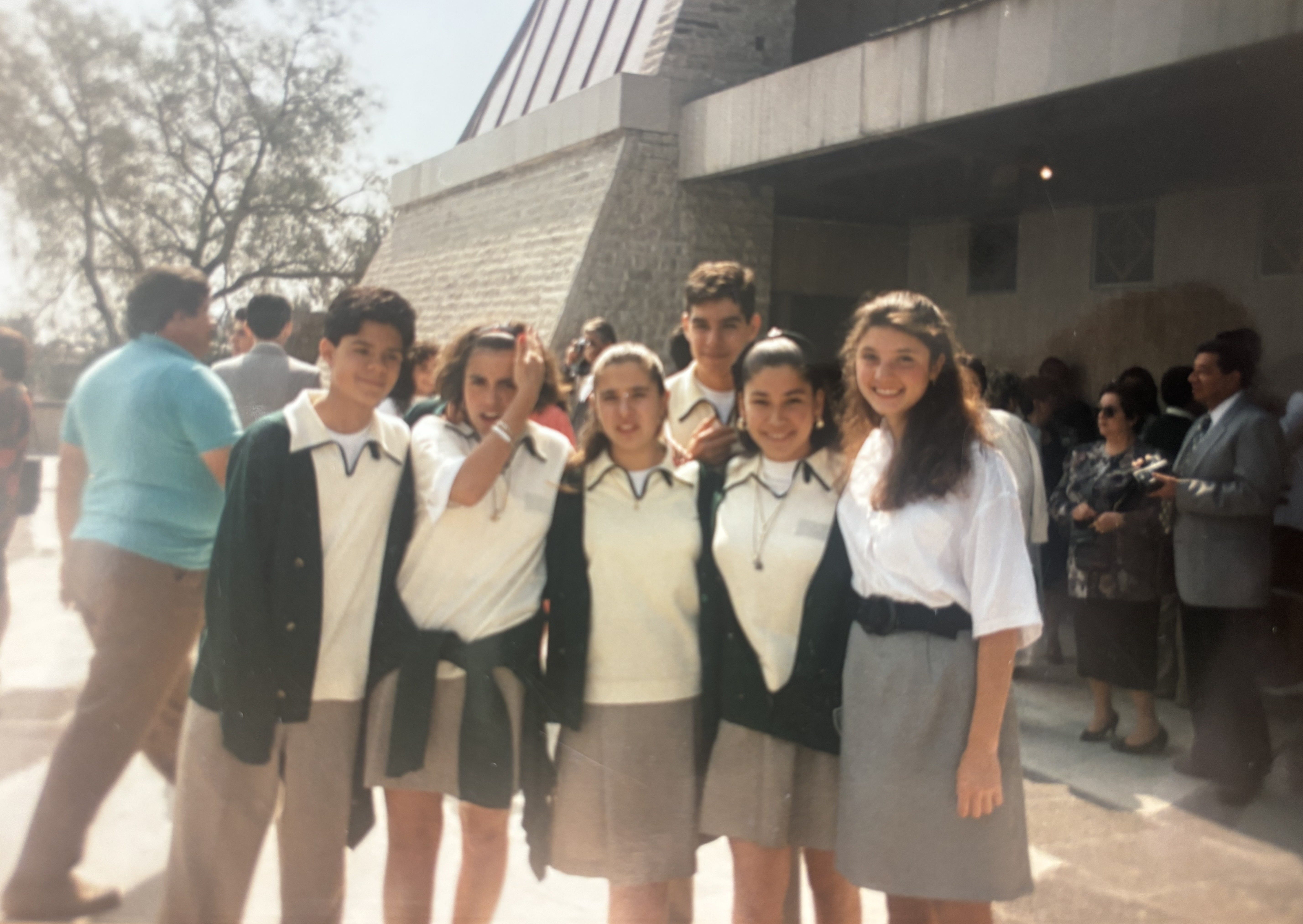
About a year following my return from Mexico, I began dating a native Panamanian at my high school. His parents had immigrated to the US when he was one, so his dad, a civil engineer, could have better employment prospects. The year after I graduated, I spent a good part of that summer in Panama with his family. There I absorbed the family connections, the love and pain of the country’s history, and the tropical heat, and heart, that permeated everything.
When I decided to study abroad in college, I again chose Latin America. I was studying Spanish, as well as sustainable development, so spent six months living with a Costa Rican family in 1999, studying alongside Ticos (Costa Ricans) at the Universidad de Costa Rica (the “UCR”, as it’s called locally), in San Pedro. When the time came to leave the country, I was reluctant to depart. I had fallen in love with the language, the people, and the physical place that was Central America.
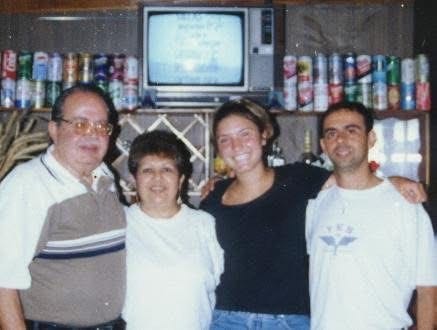
Since this experience, I’ve returned to Central America a few more times, including a weeklong trip to Honduras that inspired the setting and characters in my novel. Pieces of my heart remain forever embedded in the landscape of Central America, the people, and their heart wrenching stories of love, family, and survival.
A Plant Without Roots: A White U.S. Experience
Despite my interest in Latin America, the fact remains that I’m a white woman with Midwestern roots. I grew up thousands of miles from Latin America. My family of origin is about as white as they come. Most of my ancestors arrived in the U.S. generations ago, and apart from Danish and Czech great-grandparents, it’s difficult to pinpoint their European points of origin.
When I was a child, extended family gatherings consisted of long football-watching sessions, cheesy potato casseroles, plenty of Jello-based desserts, and avoiding all discussion of politics. With a broad spectrum of education, political perspectives, and socioeconomic realities, there has been much division and estrangement in my family of origin.
Dissecting my own family issues brings unresolved heartache, grief, and pain. There are so many words unspoken, so many things unknown, that my family often feels it has congealed into a cold, hollow shell of what it may once have been, centuries. I can feel the ghosts of my ancestors haunting me from a far-off place, whispering the pieces of our family history that were lost in the distant past.
I do not think this experience of loss and incomplete family identity is unique to me. Unacknowledged loss of culture seems to permeate white America (U.S). I have seen the shadows of an ugly, nameless personal history morph into addiction, dissociation, anxiety, and depression – even cruelty and violence. Many of us are like plants existing without roots. Desperately we attempt to grow and understand our lives, while silently suffocating from our own cultural anemia.
Through my writing, I dissect this lack of identity, working toward an integrated understand of how uprootedness has influenced who I am, and who I’m becoming. I’m also looking at how this plays into broader societal amnesia — and the pathologies it feeds. How can we learn from other cultures who’ve lost and regained a sense of rootedness?
In part two of this post, I will delve into the key elements of my novel and the themes it explores.
Thanks for sharing. I came to North America over 13 years ago and struggle with identity for a very long time. It’s easy to identify and blend in when everyone around you shares the same culture and looks the same. However over time I have come to question whether identity transcends culture, race, religion and our beliefs? Am I limited to beliefs and tag that were given to me at birth or am I more than this? Who am I?
Thanks for sharing this Rachel. Digging into our cultural and family heritage can be such an intimidating and even painful experience. But also really important and, like you said, one that many White people in America are missing. I definitely feel this.